
Adrian Tchaikovsky
Alien Clay
Alien Clay
Couldn't load pickup availability
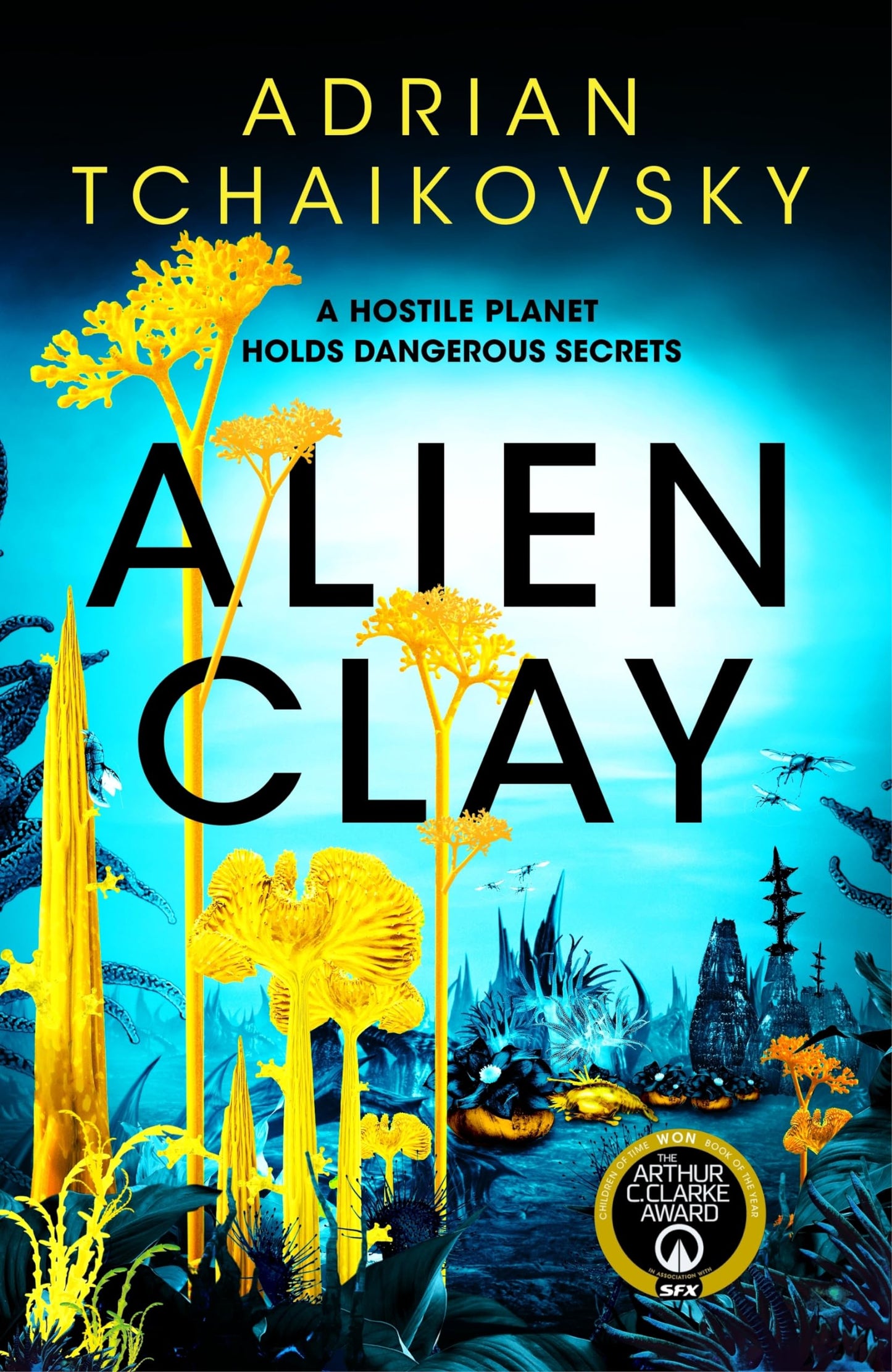
Alien Clay is a thrilling tale of alien encounter – from the acclaimed Arthur C. Clarke Award-winner Adrian Tchaikovsky.
Lindsay's Review
A marvellous sci-fi thriller, Alien Clay is already being acclaimed as a new must-read cult classic. Tchaikovsky has a written a symphony of a book that can be read on a number of levels. It’s primarily a romping tale of our future society as we explore exo-planets in the nearby galaxy and harness the exploitation of their resources while negotiating around alien life.
Earth society has become a strictly controlled communist-style dystopia called The Mandate to which all must adhere or be sent to the off-world work camps. Kiln is a seething jungle, but also the only planet with archaeological remnants of civilised life. Captured revolutionary scientists are actively sent there as forced labour to help in the planetary survey. But the planet and its strange ecology, developed through a totally different evolutionary path to earth, confounds human understanding. It also seeks to destroy the slave colony in a slow and insidious manner. The pressure of harsh penal life inevitably leads to rebellion and an attempt to return to earth.
On another level, those well versed in the history of the genre of science fiction will recognise that ideas from earlier classics are woven through the text. The story consciously highlights and pays tribute to such sci-fi greats as C. S. Lewis, George Orwell, William Burroughs and Robert Anson Heinlein. Alien Clay could be considered the 1984 of our times, or an extension of the near-distant future of an Orwellian dystopia which warns about the abuse of power of a political elite, and which shows the fascist boot still eternally stamping on the human face.
Alien Clay also explores our philosophical understanding of what it means to be human when confronted with an alien ecology and intelligence; one so differently evolved that recognition of its sentience seems almost beyond our grasp. Yet that intelligence assumes a very pure version of what The Mandate proposes for humanity. In echoes of Heinlien’s Stranger in a Strange Land, the question of how alien intelligence could positively affect the evolution of human society is explored, but with a biological twist.
With this novel Tchaikovsky stakes his place as the next writer to affirm the relevance of sci-fi for a new era. It’s a book that will be talked about for years to come; its author rightly takes his place amongst the founders of this fascinating genre.
Publisher Blurb
They travelled into the unknown and left themselves behind . . .
Professor Arton Daghdev has always wanted to study alien life in person. But when his political activism sees him exiled to the planet Kiln, condemned to work under an unfamiliar sky until he dies, his idealistic wish becomes a terrible reality.
Kiln boasts a ravenous, chaotic ecosystem. Its monstrous alien life means Arton will risk death on a daily basis – if the camp’s oppressive regime doesn’t kill him first. But, if he survives, Kiln’s lost civilization holds a wondrous, terrible secret. It will redefine life and intelligence as he knows it – and might just set him free.