
Ben Reeves
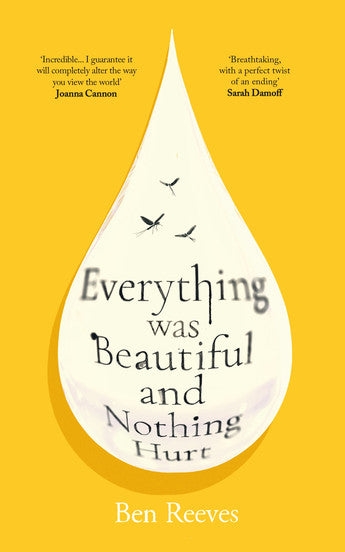
Everything was Beautiful and Nothing Hurt (Released 29/09/26)
Everything was Beautiful and Nothing Hurt (Released 29/09/26)
Couldn't load pickup availability
An astonishing and deeply moving novel about finding beauty in the brevity of life, as narrated by the one who knows it best: Death.
Everything was Beautiful and Nothing Hurt is the debut novel of British writer Ben Reeves. The title is only the first of many narrative devices that may have you dismissing this book as schmaltz or lightweight fare. Don’t do this. (The title is a line from Kurt Vonnegut’s 1969 important anti-war novel Slaughterhouse-Five). In one sense the book is a straightforward read: it uses plain, everyday language, is dialogue-heavy and conventionally structured. But ‘easy reading’ this book is not. This is one of those books that seeps into your soul, slowly.
The story’s protagonist and the narrative voice is Death in human form. There is nothing new about this: Australian author Markus Zusak’s The Book Thief is a notable example, Terry Practhett did it in Mort and Leo Tolstoy was partial to this literary device. In both The Death of Ivan Ilyich and Anna Karenina Death is personified or is at least a physical presence.
In Reeves’ novel it’s Travis Smith, a very ordinary 30-something man, nothing special to look at, holes in his coat and socks, gentle and patient. Travis wanders the streets of a nameless English town, moving through the population, observing humans. Quietly curious about why people feel and do what they do, he hears everyone’s inner thoughts as he passes them on the streets. People generally know who he is, and he spends the last few minutes or hours of their lives with them. Death lives as a man, though he changes form and names over time. He eats. He has a vegetable plot. He stays with every person until the end and tells them it’s okay. He never forgets any of them. He is “everywhere and always and it never stops.” He simply knows everything about everyone, from birth until death.
Now, a lot of questions are raised about the internal logic of this premise. Many questions of a philosophical, theological and psychological nature are right there for the reader, but none of them is answered. And yet this novel is immensely satisfying. How is this achieved? Why is a scruffy narrator moving through humans like a walking omniscient narrator, hearing everyone’s stream of consciousness self-talk and being present with them at their death, so completely affecting? Everyone Travis meets or ‘visits’ is for him a composite of that person’s memories and experiences; that broken bone after falling from a tree as a child, a school disco, a first kiss, a broken heart, an epic-fail job interview, existential human fear alongside learning to ride a bike. Sitting with an 89-year-old woman on her last day, Travis says: “For a moment I can see the smart young woman inside her, and the tomboyish girl before that.”
It’s clear that Travis himself does not decide when it is a person’s time to die, nor can he change this. He simply cares deeply and is present with them as they face it. They ask him questions. He answers the best he can, and he tells us that children ask the hardest questions. We, the reader, have questions about fatalism, determinism and what happens after death, but none of this really matters in the world of this book. The structure of the book is comprised of short, concise episodes that end with a person’s name, age and time of death. They are very old people, children, bad people, innocent people, sick people and those who don’t deserve to suffer. These episodes are moving and thought-provoking, as we suspend our disbelief and surrender to this almost magic realist premise. It feels fresh and honest to read, deeply human and real.
The narrative’s red thread is a relationship that breaks Travis’s rules, “the rules of the game.” While Travis always feels love for a person meeting their death, the only time he wants to stop death from happening is with a young midwife who lives across the hall. Therein lies the conflict of this story; of the plot I shall reveal no more. If you like a novel that makes you think and feel about what it is to be human, about what matters about our lives, why we are here and what to do with our time, I urge you to read Everything was Beautiful and Nothing Hurt.
Anya
Publisher Blurb
An astonishing and deeply moving novel about finding beauty in the brevity of life, as narrated by the one who knows it best: Death.
Full of compassion and deep magic, Everything was Beautiful and Nothing Hurt might be a novel about Death, but it's also about the joy of being alive - because only through knowing that all things must end can we truly appreciate all the things that we already have, from the people around us to the strange wonder of our spinning world.