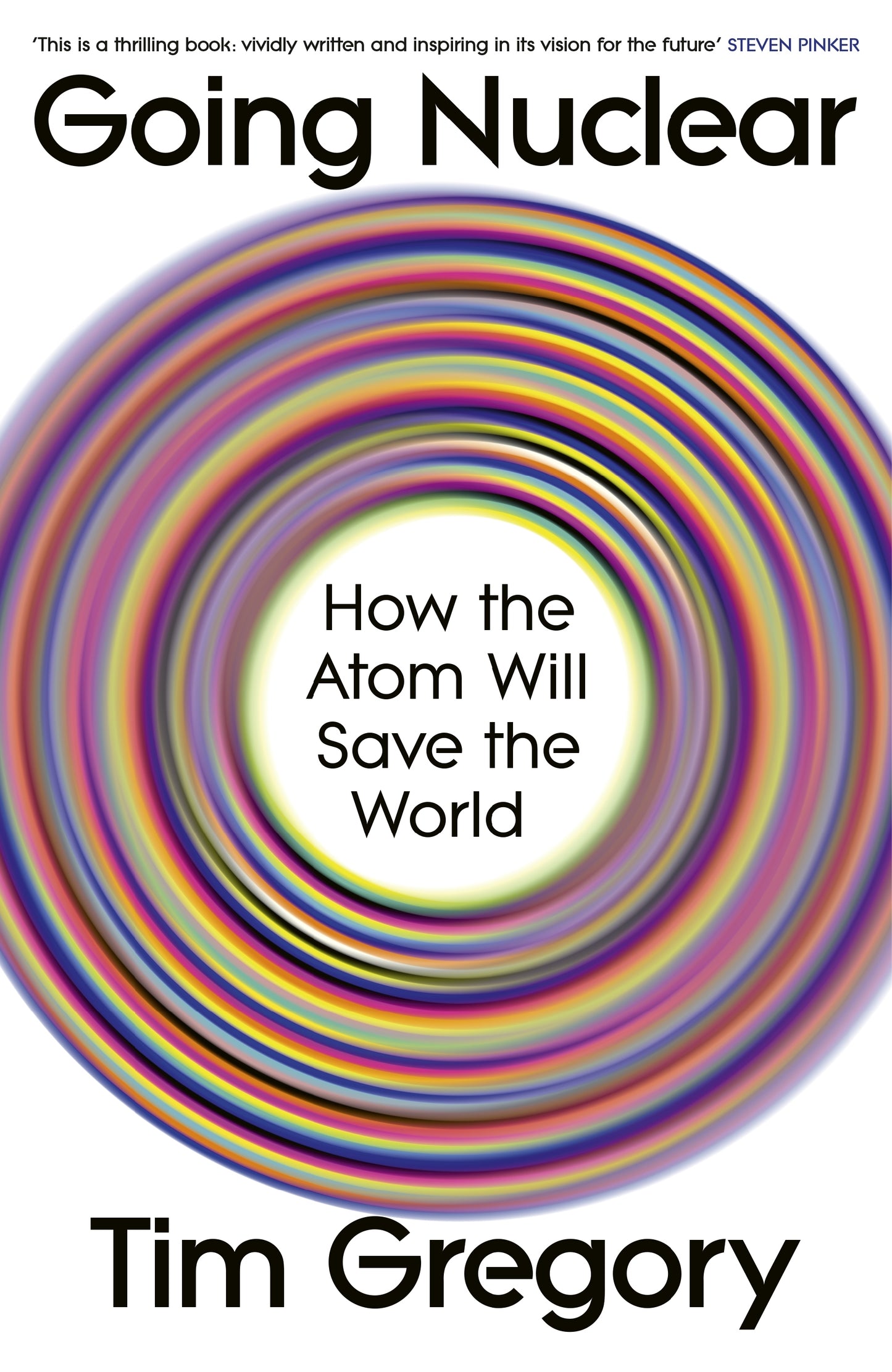

Tim Gregory
Going Nuclear
Going Nuclear
Couldn't load pickup availability
A bold and groundbreaking call to harness the untapped potential of nuclear power to tackle our global climate and energy crises, from a leading chemist at the UK's National Nuclear Laboratory.
Sam's review
More than any other energy source, nuclear power can provoke an almost visceral reaction. We think of Chernobyl; of yellow drums with skulls printed on them; of glowing rods; and, in the case of The Simpsons, three-eyed fish and frequent near disasters. In Going Nuclear, Dr Tim Gregory seeks to assuage our fears and demonstrate that nuclear is not just the solution to net zero, but a vital advancement in medicine, food production, and space exploration.
Dr Gregory is a nuclear chemist at Sellafield, the UK’s largest and oldest nuclear power plant. His position demonstrates both his expertise and his inclination to talk about nuclear in a favourable light. His writing wears his expertise lightly, and his passion for the subject is clear. Whether the fervour of his argument convinces or deters you is the question.
The book begins with a lesson on the chemistry of nuclear energy, and he explains the complex subject with great clarity and the occasional dash of humour; more than one of our non-fiction book club members said they wished they had had him as a science teacher at school. As he explains how the splitting of atoms creates the enormous release of energy that we have harnessed for both good (electricity, medicine) and bad (bombs), he introduces the scientists who discovered the power of nuclear energy. There is a verve and energy to his descriptions of these discoveries, some of which beggar belief.
Italian physicist Enrico Fermi built the world’s first nuclear reactor out of uranium, graphite, and wood on a squash court in Chicago. His safety procedures, designed to avert disaster should the reaction prove too powerful, included a man with an axe and a three-strong “suicide squad” who would pour a cadmium solution into the reactor to poison the chemicals within. Amazingly, it worked, and Gregory beautifully describes the momentousness of this incredibly brave experiment: “Prometheus wrested fire from the Olympian gods and gave it to humankind. With it, we swiftly learned how to kindle brilliance and ignite terror... the flame of nuclear fission brought us to the forked road of promise and peril.”
After the science and history lessons, Gregory embarks on the central mission of the book: to convince us that nuclear power is our future, and the only way we can have a future amidst the ever-growing climate catastrophe. Some arguments he makes very well, evidencing the recycling of nuclear waste for both further energy production and use in nuclear medicine, the self-harming strangeness of Germany’s decision to close nuclear power and reopen coal power while pushing for net zero, and the greenwashing of electric vehicles as non-polluting when the majority of the electricity they use comes from coal-fired plants. Others I was less convinced by.
While not dismissing renewables, Gregory argues that they are inefficient and incapable of producing the electricity we need to “decarbonise our world whilst sustaining economic growth”. He provides figures and evidence for this conclusion but omits mention of success stories such as Costa Rica running on 98% renewable energy and South Australia sourcing 75% of its electricity from renewables. Similarly, when he makes his case for the safety of nuclear, he provides reasoned evidence for the lives lost to air pollution caused by coal and oil, and shows how nuclear waste is recycled or disposed of safely by countries such as Finland and France, but seems to select evidence that fits his argument regarding nuclear disasters. He details research that puts the death tolls from radiation poisoning at Chernobyl and Fukushima at 50 and 1 respectively, but omits other studies that put these figures at up to 4,000 for Chernobyl and up to 130 for Fukushima.
I do not believe his intentions are duplicitous or cynical; rather, I think his passion for the capabilities of nuclear energy leads him to take the most optimistic view of every aspect of it. This passion is the book’s greatest strength and its only weakness. He will have everyone who is pro-nuclear punching the air and may well win over many who are on the fence. However, there are points when his enthusiasm comes across as a sales pitch, which is just as likely to alienate sceptics, cynics, and many undecided readers who may have been won over by a more matter-of-fact tone.
All of that said, I would highly recommend Going Nuclear. Gregory is an engaging writer who clearly explains the complexities of, and debates about, nuclear energy. His optimism is infectious, and his belief that “young people deserve reasons to embrace the world and work to solve the challenges that beset it” demonstrates his good intentions. I finished the book believing that while nuclear is not the ideal solution Gregory puts forward, it is a solution we must harness in the immediate term. The perfect should never be the enemy of the good, after all. And while Going Nuclear is not perfect, it is very good indeed.
Publisher Blurb
A bold and groundbreaking call to harness the untapped potential of nuclear power to tackle our global climate and energy crises, from a leading chemist at the National Nuclear Laboratory.
What if climate change isn't an environmental challenge, but an energy challenge?
In this visionary book, Dr Tim Gregory urges us to rethink the path to net zero. He argues that the solution to climate change lies not simply in replacing fossil fuels with renewables, but in fully embracing another energy source that emits zero carbon dioxide: nuclear power.
Gregory dismantles the conventional wisdom that renewables such as wind and solar are completely ‘green’, and debunks myths surrounding nuclear waste and radiation, demonstrating that nuclear power is not only reliable, safe and potent, but the most environmentally responsible way to harvest energy.
Going Nuclear calls for decarbonisation to be the twenty-first century's Apollo programme. By interweaving scientific optimism, myth-busting data, and ambitious policy ideas, Gregory illustrates the boundless potential of the atom beyond just clean energy: from advanced medicine and forensics to atomic gardening and space exploration.
This is a bold case for an alternative, sustainable and prosperous future: a world in which abundant energy is available to all.