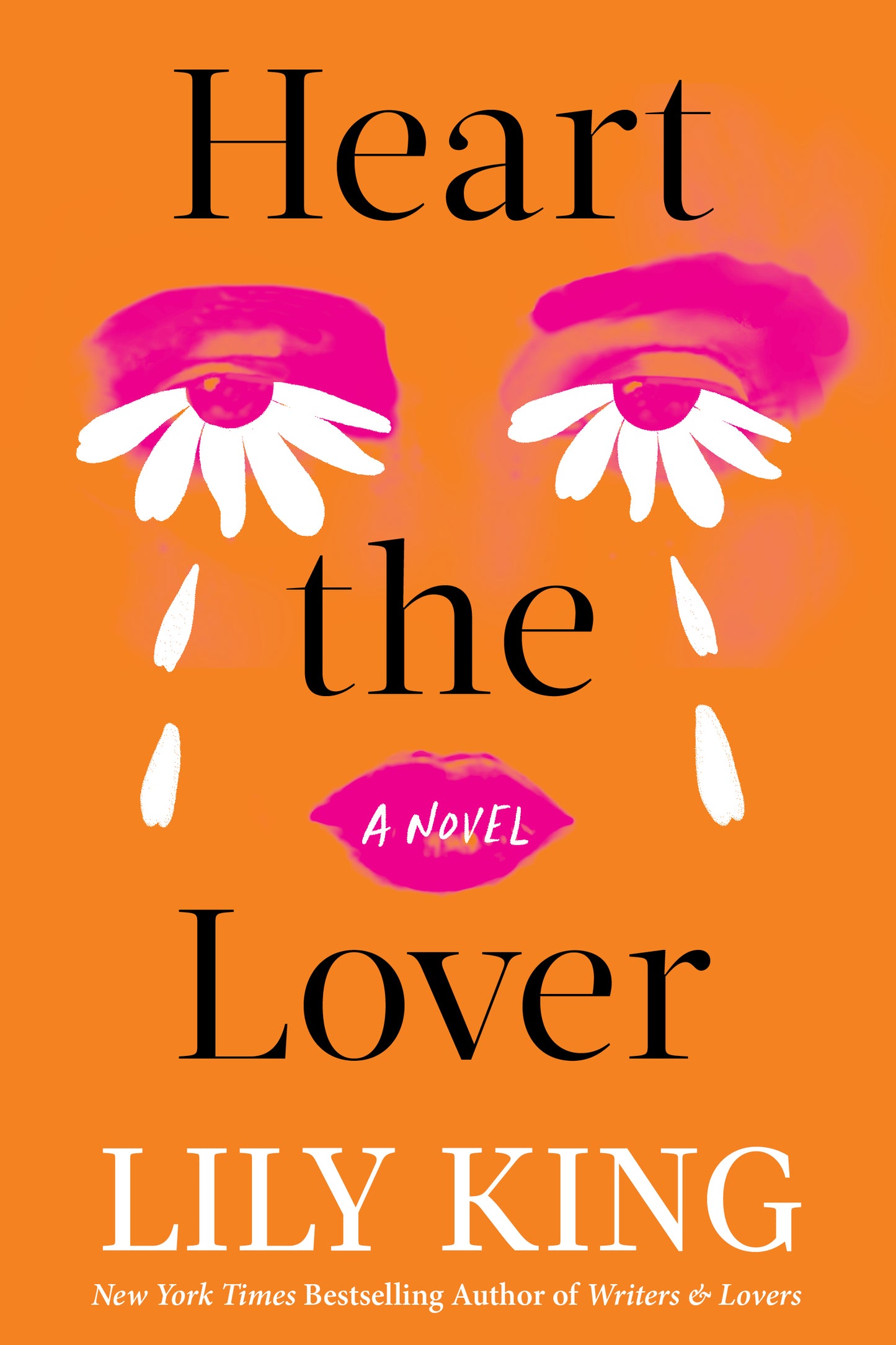

Lily King
Heart the Lover
Heart the Lover
Couldn't load pickup availability
Shortlisted for the Women's Prize for Fiction 2026. A magnificent and intimate new novel of desire, friendship, loss, and the lasting impact of first love.
Gabi's Review
Heart the Lover, Lily King’s new novel, gave me several reasons to run a mile: a love story under a lurid cover, and few subjects are messier than love’s strangeness and what desire makes us run toward. An erudite podcast and the book’s shortlisting for this year’s Women’s Prize talked me into reading it, and I am the richer for it. This is a clever, complex novel that leaves you thinking. It is also warm, witty, insightful, and capacious in its empathy; it’s a genuine pleasure. It is set in the 1980s amid disadvantages female students faced competing for standing among their male peers, and the setting is entirely recognisable. While women now have more agency, the question of whether love is more beautiful as an ache than a fact may never progress; it’s that question which gives the book a timeless resonance. King opens with a dare. You always said I’d write a book about you — here it is, Jordan tells the beloved on the first page. The phrase primes us to distrust her. King assembles all the machinery of the unreliable narrator and then quietly refuses to use it. That refusal is the novel.
The story begins on an American campus where intellectual brilliance is social prestige. Jordan, the name the boys give her (she withholds her own until the book’s final sentence) falls into a triangle with two friends, Sam and then Yash, and the novel follows the three of them across decades. The men are wonderful company on the page, each performing an electric brilliance in the dialogue King is so admired for conjuring. Sam is rigid, prescriptive, controlling; Yash is warm and emotionally fluent, yet haunted by private demons and the demands of male friendship fealty. At times in Jordan’s self-sacrificial story, I wondered if Yash’s story wasn’t the more interesting one to hear. Campus life is gorgeously and nostalgically evoked; late nights ring with abandon and the revelry among good friends. All three characters are literature students, and the literary talk is one of the book’s great pleasures.
The women in Jordan’s life see her throughout for herself. The men get there late. A mid-section meeting between Jordan and Yash in their later years is told in the second person, but the effect is more than intimacy. Jordan isn’t telling us about Yash; she is speaking to him, and we become eavesdroppers on a private letter. That simple grammatical shift changes everything. By denying us an objective vantage, King also denies us the evidence needed to apportion blame. Heart The Lover is about the subjective experience of love. Subjectivity is not a flaw awaiting correction but the medium through which love is experienced. Jordan trusts love, while the boys are more alert and attuned to its potential pitfalls.
It would be easy to read Jordan as self-erasing. Total, vulnerable love and internalised female self-sacrifice look identical from the outside; only their inner lives tells them apart, and the inner life is the one thing a reader cannot verify. When the novel finally widens to let others speak, they do not overturn Jordan’s account but deepen it. What first looked like a story inviting suspicion resolves into one about the ordinary, devastating errors people make while trying to align two lives. The title is a game the friends invent, and it names the subject exactly: the weight of capture, and how willingly we carry it. Heart the Lover is less interested in assigning fault than in revealing love as a capacity; one that enlarges Jordan even as it wounds her.
A novel like this cannot be argued with; it can only be met. To read Jordan generously is itself an exercise of the capacity for understanding that is one of the book’s major concerns. The story is devastating and exhilarating at once, and the source of both is the same: to love is to occupy both states, irrespective of time and place. A person who has been read truly even once, as Jordan is by Yash, is spoiled a little for the half-light everyone else lives by and calls enough.
Gabi