
Patrick Radden Keefe
London Falling
London Falling
Couldn't load pickup availability
Sam’s review of London Falling
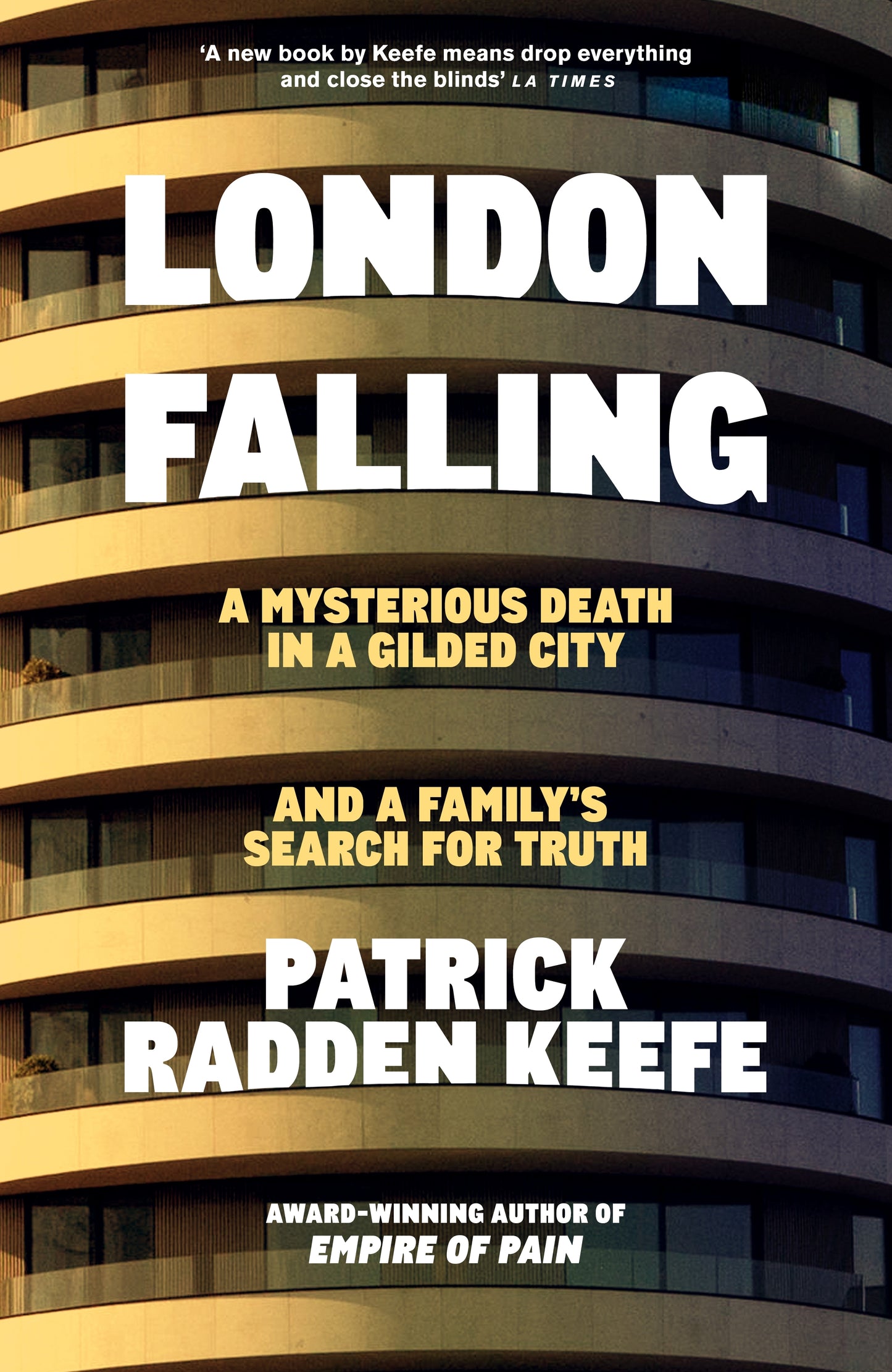
Since moving to Australia from the UK nearly two years ago, I’ve had countless conversations with people about London, all based on a version of the question: “Is London as bad as it seems in the news?” My answer? It’s not. It’s not a lawless dystopia, nor is it run by Muslim fundamentalists under Sharia law. And it’s certainly not both things simultaneously, as some illogical people would have you believe. The city is, however, hugely flawed. And it is the fatal flaw that investigative journalist Patrick Radden Keefe explores in his latest book, London Falling.
Keefe’s two previous books uncovered the Sackler family’s role in America’s opioid crisis (Empire of Pain) and examined the Troubles in Northern Ireland through the story of the abduction and murder of Jean McConville, a widowed mother of ten (Say Nothing). Like both these books, London Falling tells a personal story in a novelistic style to delve into an important social and ethical issue. In this case, the story is the mysterious death of a young man, Zac Brettler, who fell to his death from a luxury apartment block overlooking the River Thames.
The book is a forensically acute and deeply empathic piece of investigative journalism that offers insights into both London’s underworld and the glittering riches entangled in the case. Unfolding the story in a manner similar to a great crime thriller, Keefe keeps the twists and turns of the story close to his chest, gradually releasing information and connections in a manner that frequently left me reeling, then running to tell my wife: “You’ll never guess what’s just happened”. This technique does more than keep readers hooked; it helps us to experience the “kind of woozy vertigo” that Zac’s parents, Matthew and Rachelle, felt as they began to learn who their son was, who he’d been telling people he was, and what his life had become.
Zac had grown up in an affluent middle-class family with deep roots in London’s Jewish community. He’d attended an elite school and lived in a stable home with loving parents. Yet as Keefe tells us: “Zac had never been a particularly reliable narrator of his own life”. His parents began to worry that he might be getting mixed up with some of the city’s more dubious characters. But although their relationship with him became strained, they chose not to intervene, believing that as a young adult, he had to make and learn from his own decisions. Tragically, these decisions ultimately led to his death.
Given how carefully and brilliantly Keefe reveals the events surrounding Zac’s death, I’m not going to reveal any specifics. But I will say that the London that so enraptured Zac, the London that proved his undoing, is a London that anyone who has lived there over the past 15 years will recognise. Keefe describes a city that due to its culture, architecture, beauty and industry is an attractive second home for “potentates, monarchs, chiefs, sultans and diplomats”. But he also points to London’s “malign power… the empty mansions, the offshore accounts, the tainted riches, the anonymous shell companies, the amoral businessmen, the predatory thugs, the incompetent authorities, the grandeur of those dazzling surfaces obscuring a netherworld of shadow”. He details how the origins of London’s bourgeoning wealth weren’t questioned, so that the city became a de facto home for Russian oligarchs trying to hide their money from Vladimir Putin. It is this world into which Zac rushed headlong, desperate to join the moneyed elites he went to school with, and prepared to tell anyone whatever story they wished to hear if it helped him secure his place at the table.
As Matthew and Rachelle try to uncover what happened to their son, they run into “bureaucratic obfuscation and semantic games” that leave them feeling “as if they were trapped in a Kafka novel”. They experience an “eerie dissonance, a sensation they had always associated with corrupt societies in other places, like Russia, rather than with the city they called home”. Their investigations, along with Keefe’s, introduce a bafflingly disparate cast of characters, from businessmen heralded by Margaret Thatcher to hugely successful theatre producers and legendary bank robbers; from vicious drug dealers to members of the House of Lords, a Los Angeles record company executive, and the staff of the Chelsea Football Club.
Keefe describes the story of Zac’s death as “a bit like an impressionist painting: if you stood close to the canvas, it looked incomprehensible … [b]ut if you took just a few steps back, the truth was not so complicated, and it all came into focus”. He paints us the clearest picture he can of what might have happened, and with a deep respect for Zac’s family, for their grief, determination and skill in uncovering facts that had been at best been carelessly misplaced and at worst deliberately concealed.
London Falling is a true page-turner, with cliff-hangers and twists that will engage the most ardent reader of crime fiction. But it is also a serious examination of what happens when wealth becomes the most important thing in a society: how it distorts our morality, undermines our institutions and puts us all at risk. It is an impressive piece of journalism, a hugely engaging piece of writing, and a book that will undoubtedly be on many ‘Best of the Year' lists in six months’ time.