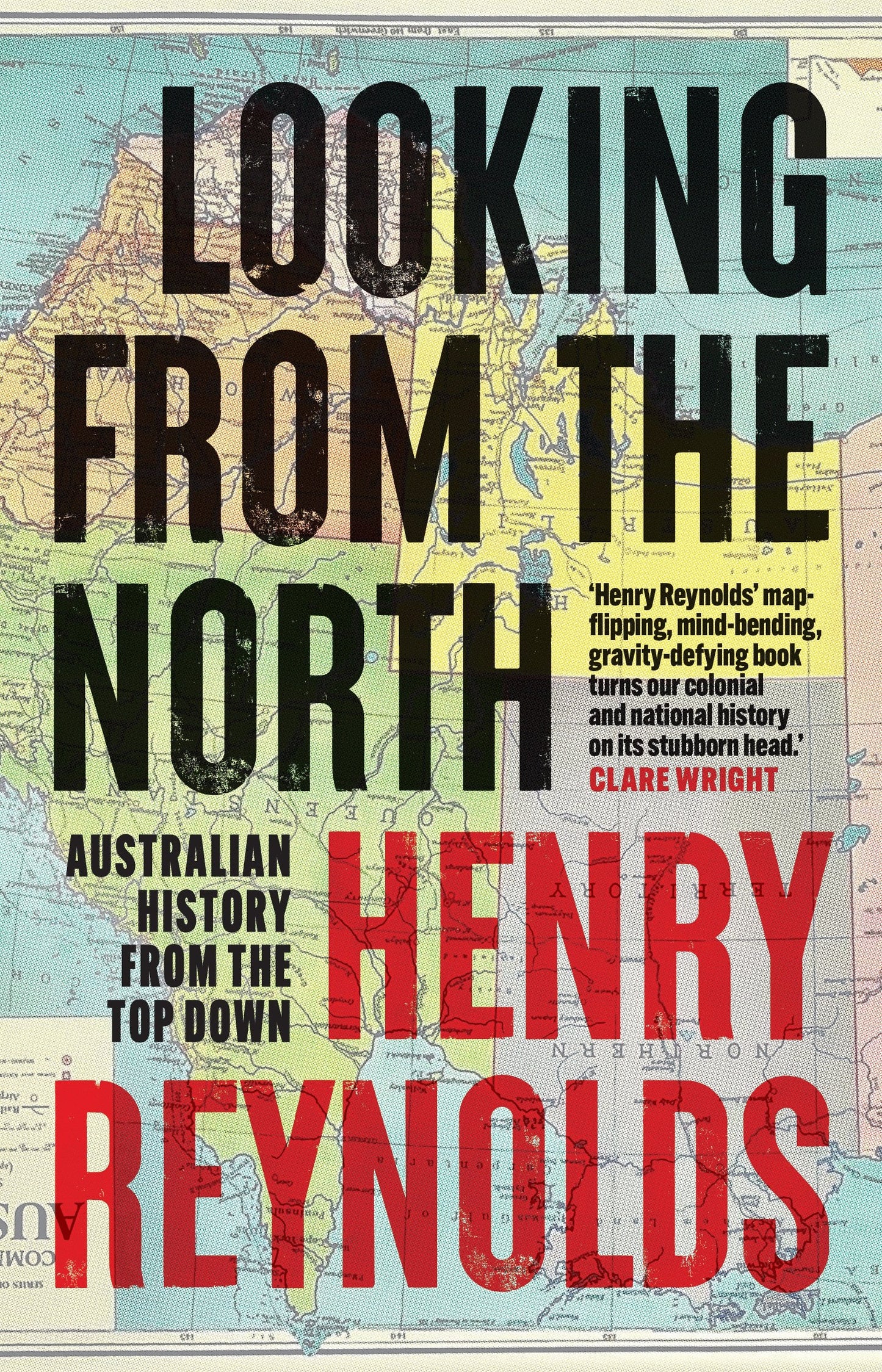

Henry Reynolds
Looking from the North
Looking from the North
Couldn't load pickup availability
Arriving in Townsville in 1965 with his partner and child, Reynolds knew nothing about North Queensland. He was there to teach history and found that many of his students had never been "down south" as far as Brisbane. He also discovered that many of the textbooks he was meant to be teaching from were written by scholars who had never been north of that city. To try and fill in the gaps, Reynold began writing histories of the north, texts that in the 1990s and 2000s were labelled by what the conservative historian Geoffrey Blainey called "black armband history". Looking From The North will likely be labelled the same by those who are minded to doing so.
Given that Reynolds was heavily involved in the campaigning that led to the Aboriginal Lands Right Act 1976, it's no surprise that Looking From The North starts with the Britain's declaration of terra nullis; a claim which Reynolds calls “both audacious at the time and outrageous in retrospect.” As he points out, this claim led to Britain acquiring control of the 7.7 million square kilometres of land “while only being in actual possession of two small colonies with a combined population of just over 50,000 people.” This imbalance lasted well into the 20th century, leaving first the British then the Australian government open to challenges to sovereignty from other European Colonial powers. The solution was to push north.
Reynolds traces the creation of the first white settlements in Queensland - the town of Bowen being particularly noteworthy – and the difficulty the British had in convincing people to go there. While a small number of people could be convinced to move from the temperate south-east to the new coastal towns of the tropics, expanding into the hinterlands proved a far harder sell. It was the cheap leasing of large acreages and promises of future riches that lured a few brave souls to venture into country. From here, the squatting movement began; what Reynolds describes as "a well-armed and often aggressive workforce accompanied by flocks of sheep, which crowded around the scare sources of water".
Reynolds reminds us throughout that these ventures were acts of theft: the land was taken by white settlers from people who had lived it on for thousands of years. It's his account of how this theft took place that should, amongst other passages, assuage any accusations of him having written a one-eyed polemic. The settlement in the north wouldn't have been possible, he argues, without the Native Police, an Indigenous force working for the white governors. They provided the security and violence that forced traditional landowners away from their homes, with 40,000 First Nations people dying at their hands, according to the figures Reynolds quotes.
For me, one of the most interesting sections of the book concerned the roles of the Chinese, Japanese and Melanesians. The Japanese were essential to the pearling industry, the Melanesians similarly central to the sugar plantations and the Chinese, having arrived as part of the gold rush, established market gardens, small businesses and became invested in mining and importing. Many of the towns and cities of the Northern Territory and Queensland would not exist without the efforts and entrepreneurship of these people. And yet, all were driven out of the country and written out of our history at the start of the 20th Century by the White Australia policy.
This history needs to be told because for all the bravery and hard work, all the “admirable qualities of the Federation era,” and all the intertwined racism and violence, the settlement of the north was, according to Reynolds, an Australian venture. It took place after Britain had handed ownership of the colonies to the Australian government, and therefore “[for] better or worse, it is our responsibility.”
As a newcomer to these shores, all Australian history beyond the tale of Captain Cook, the last forty years' Ashes series and Bill Bryson's Down Under is new to me. For this reason, I approached Looking From The North without the ideological preconceptions many will bring to Reynolds' work. Some of his arguments will doubtlessly anger those who like their history as it was told 60 years ago. There are facts that will be contested. And, as with any historian, he writes with his own biases. But it is hard to argue that the story of northern Australia is one that has been overlooked; as just one example, none of the Lane Bookshop’s non-fiction book club had learnt about this aspect of the nation’s history in school. If I want to become a citizen of this country, I need to understand its history, its good and bad, its black, white and grey. Looking From The North seems a valuable place from which to begin my learning.
**Shortlisted, Victorian Premier's Literary Awards 2026, Non-Fiction**
Henry Reynolds’ ground-breaking re-examination of Australian colonisation from the north down.
When acclaimed historian Henry Reynolds moved from Hobart to Townsville to teach Australian history in the 1960s, he discovered the books of the period covered very little about northern Australia and First Nations peoples. He set out to help remedy the situation and ended up transforming Australian history in ways he could never have imagined.
In Looking from the North, Reynolds again turns Australian history on its axis with an exploration of colonisation north of the Tropic of Capricorn. Reynolds tells the stories of the European, Chinese, Japanese and Pacific Islander people who were vital to the settlement of the north. Along with the experience of First Nations peoples, from employment on stations and as native police to the land rights and homelands movements, Reynolds shows how the colonisation of the north, officially beginning in 1861, was a very different venture to settlement in the south. He argues that it provides profoundly important lessons for the world we live in today.