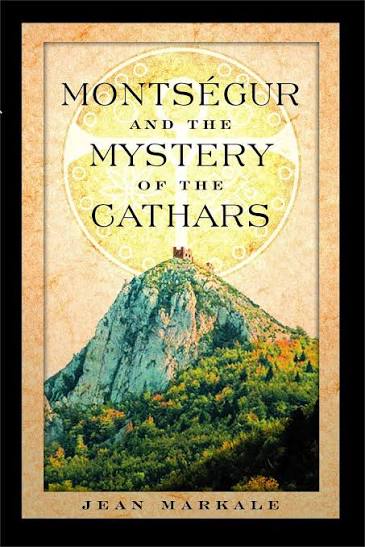

Jean Markale
Montségur and the Mystery of the Cathars
Montségur and the Mystery of the Cathars
Couldn't load pickup availability
Lindsay's Review
Scattered across the inhospitable Pyrenees mountain peaks is a string of mysterious ancient ruined fortresses. Whose were they? And why were they important?
Jean Markale’s fascinating book Montségur and the Mystery of the Cathars addresses these questions by diving deeply into the entanglements of the Cathar religion during the Medieval period; a religion once deemed so heretical by the Catholic Church that the Inquisition burned 200 practitioners on pyres. Legend has it that all the Cathars walked calmly into the flames without a struggle. Markale’s tells the story of how the Castle of Montségur, on the French/Spanish border, a Cathar stronghold, was finally defeated by the Church, and how the remaining Cathar peoples were all but erased from history.
Markale is one of those old-school researchers who brings a lifetime of knowledge about European culture to this work. Unlike some modern scholars who are too specialised to see how the many parts of history work together and using his prior studies of Druidic and Celtic culture, he explores the integration of Cathar practices into France. He argues that Catharism is not a heretical religion, but a dualistic belief system related to Persian Zoroastrianism, which over the centuries travelled from its foundations in Bulgaria to its final resting place in the isolated Pyrenees mountains of France. Here it comes into contact with the Gnostic teachings brought to Europe by Mary Magdalene, as taught to her by Jesus after the resurrection.
The Cathars were perceived as a threat to the wealth and power of the Catholic Church because they brought a new and personal way to have a relationship with God: a type of stoicism and purely ascetic life, free from wealth, hierarchy and religious dogma. With neither temple ruins nor sacred texts to study, Markale’s brilliant research brings to life the mysteries of the Cathars and furthers the search for remnants of their culture today.
Markale provides an important missing piece of the puzzle about the growth of European religious beliefs emerging from the Dark Ages and into Medieval political power struggles, and later into the Huguenots and Hitler’s SS search for the Cathars’ treasure. People already well read in this period will gain a great deal from understanding the role of the Cathars and will reflect on the possibility that had they survived and thrived, Europe might be much more enlightened today. Montségur and the Mystery of the Cathars is both thoroughly researched and highly readable, both scholarly in tone and peppered with Markale’s personal reflections from his travels in the Pyrenees region.
Available only by order.