
Guiliano Da Empoli
The Hour of the Predator
The Hour of the Predator
Couldn't load pickup availability
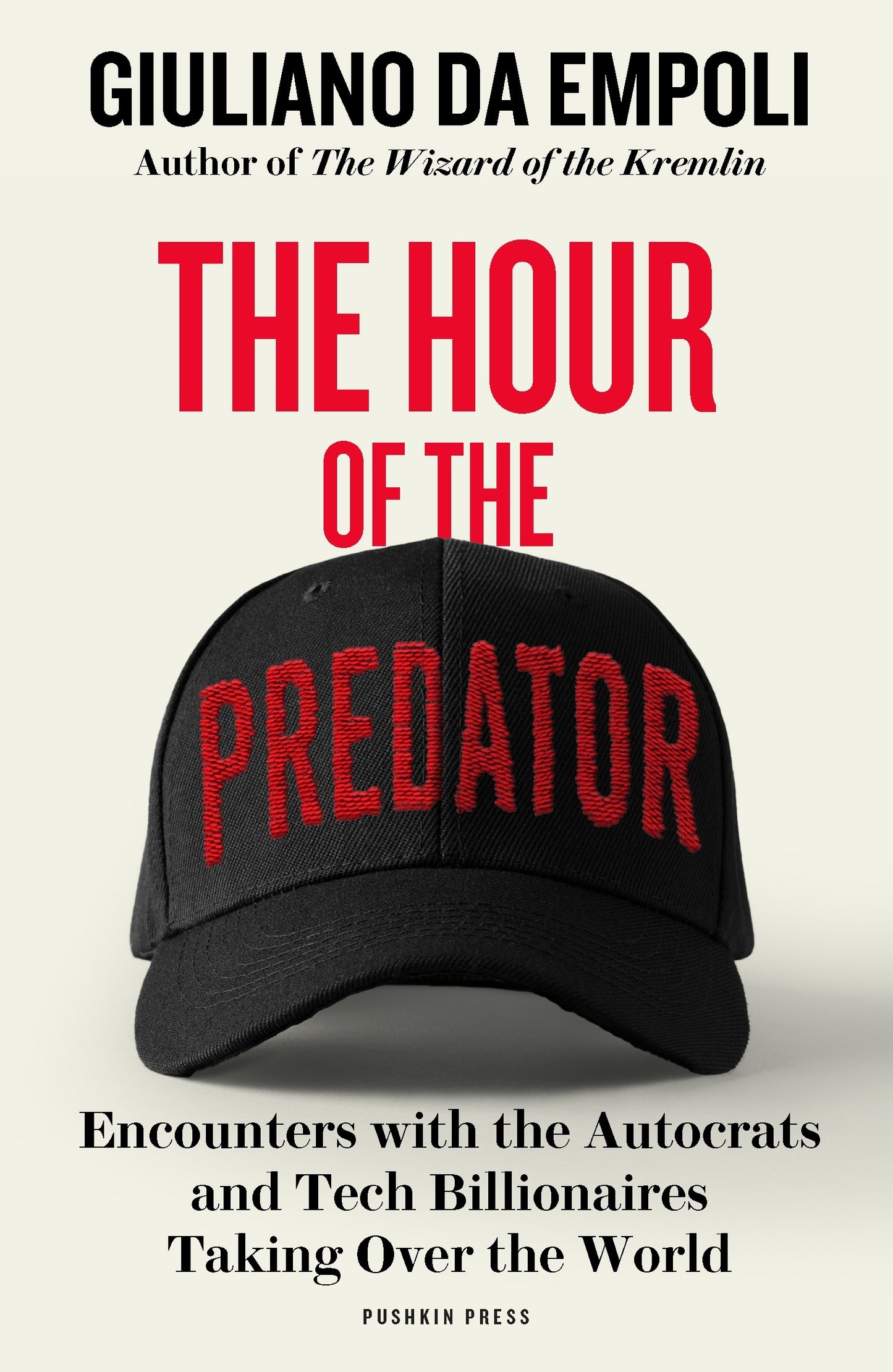
Giuliano da Empoli’s The Hour of the Predator is a slim, elegant little book that behaves like a thrown glass: it doesn’t just shatter, it reveals what the room was made of. The first half pivots around the United Nations, and da Empoli’s great trick is to strip that building of its lofty acoustics and show you the machinery underneath. In his hands the General Assembly becomes less a temple of ideals than an annual mass unmasking, when “the world’s most powerful people become mere bodies again”, crammed into lifts, barging down corridors, sprinting because “you wait or you run; there is no in between”. The old enchantments of distance and ceremony don’t survive close quarters. Power becomes sweaty, impatient, male, and hilariously fallible. He even gives you the ratio of modern governance with the kind of accuracy that stings: ten per cent West Wing, twenty per cent House of Cards, seventy per cent Veep. It sounds like a joke until you realise it’s a diagnosis.
From there the argument widens: predator time is not merely a change of cast but a change of operating system. Da Empoli’s Moctezuma prologue is the perfect cold open for our era’s default failure mode. Confronted by something unknown, leaders “decide not to decide”, hoping to avoid conflict and preserve dignity, and end up with “war and dishonour” all the same. That paralysis is echoed later in the rituals of degradation he describes in capital after capital: politicians fussing over visiting tech conquistadors, begging for an AI lab, settling for a selfie. The point is not that institutions are corruptible — they always were — but that they were trained for a world where legitimacy moved slowly, while predators thrive on velocity, spectacle and asymmetry. The UN scenes matter because they show the old order’s disadvantage in physical form: too many actors, too little space, too little time, too much performance pressure, and just enough procedural theatre to mistake motion for progress.
Reflecting on the strong man “predator” archetypes only deepens the point. The Volatile Disruptor lives off uncertainty and keeps the room emotionally off balance; the Cold Strategist profits from everyone else’s panic and the slow churn of process; the Theatrical Populist turns attention into currency and outrage into policy. Da Empoli never writes about psychology, but the structural laws he identifies — the fatality of hesitation, the economy of shock, the asymmetry between attack and defence — read uncannily like the behavioural dynamics of narcissistic power. His predators are not psychological types but political inevitabilities; yet the resonance is unmistakable. The book doesn’t hand you a numbered self help programme, but it repeatedly implies the same survival logic: ambiguity feeds predators, so decide early; shock is a tactic, so don’t reward it with frantic overreaction; and when attack is cheap and defence is dear, you win by tightening coordination, hardening systems, and refusing to be dragged into someone else’s emotional weather.
One passage in particular lingers: the leader as “scapegoat in waiting”, Tolstoy’s ram fattened for slaughter. It lands because it names the endgame of systems under extreme stress: once chaos crosses a threshold, order is restored by sacrifice, and the crowd’s devotion curdles into blame with astonishing speed — a bleak warning for those in power, and for the predators who believe themselves exempt. Da Empoli’s prose is beautiful but never ornamental; it is a delivery mechanism for cold clarity. If the book has a limitation, it is that he is better at showing the predators than prescribing the antidote. But perhaps that is the honest position: in predator time, there is no antiseptic solution, only habits that reduce your exposure. The Hour of the Predator is, finally, an urgent little field guide to what it feels like when the diplomatic world is forced to move at the speed of modern disruption — and why the only durable counterweight is composure, coordination, and the discipline to stop feeding the animals.