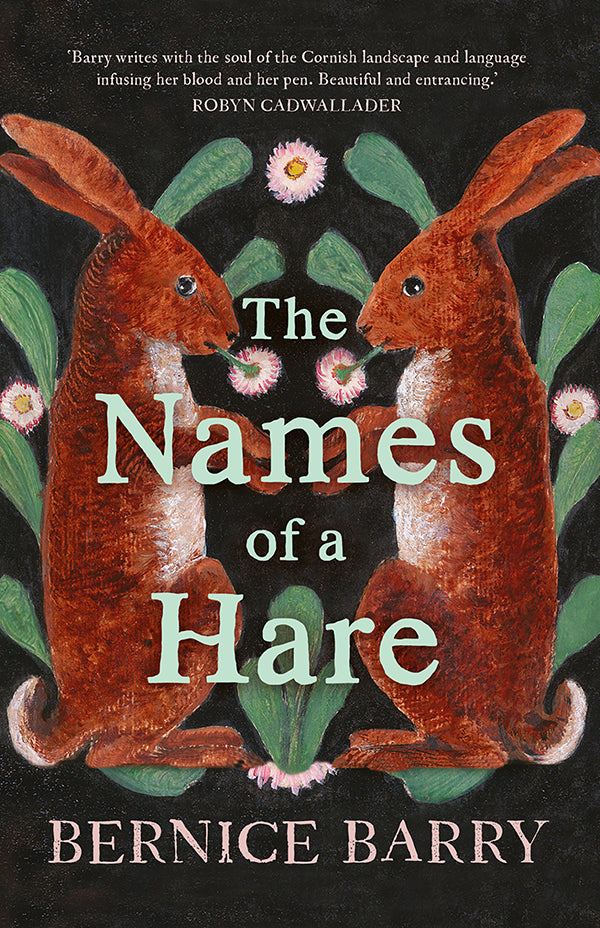

Bernice Barry
The Names of a Hare
The Names of a Hare
Couldn't load pickup availability
Cornwall, 1628. A young girl guards a dangerous secret: she can leave her body and fly. Steeped in herbal lore and forbidden spells, the girl becomes a woman, while across the land whispers of witchcraft turn deadly.
Anya's Review
Bernice Barry is a West Australian author originally from Cornwall in the U.K. Her new novel, The Names of a Hare: A magical tale of forbidden witchcraft (Fremantle Press) is set in the author’s birthplace, Cornwall, in 1628. It’s a transporting and strangely beautiful chronicle of a singular woman dwelling in a world of mystery, secrets, superstitions and mistrust. It is a dangerous place for women, particularly those skilled in the ‘old ways’ that used herbs to cure ailments and cast enchantments. The woman’s antagonist is Matthew Hopkins, a witch-hunter at large during the English Civil War. The witchfinder pursues this unnamed woman without mercy, as the story tumbles through the history of 17th century England, via the plague, mass witch trials, Kings, Oliver Cromwell and the freezing over of London’s River Thames in 1684. Readers who enjoyed Maggie O’Farrell’s Hamnet will be familiar with the world of Barry’s novel, and with the memorable atmosphere of Hannah Kent’s Burial Rites.
We first meet our protagonist as an unusual young girl, and we stay with her as she travels through the West Country until her death in her sixties. The work is framed as a kind of memoir, written in first person point-of-view for the “people who come after she’s died.” Intriguingly, the woman is not always a reliable narrator, and while she is called many names over her lifetime, none of them is her real given name. Barry intertwines her story with ancient British folklore about the tricky and elusive naming of hares, animals associated with witchcraft. Quite the animal of the moment, hares! I loved Chloe Dalton’s 2024 memoir, Raising Hare. These shy, wild and symbolic creatures appear throughout Barry’s novel, and incantations to hares and protocols for addressing them contribute to the book’s sensory and otherworldly feel. The Names of a Hare is rich in historical detail and vivid imagery. The Cornish language peppered throughout the novel, including the featured 13th century poem listing all the names for hares in Middle English, makes this an idiosyncratic and unique read. If the subject matter interests you, revel in the women’s lore, wild places and the power of language to hold our fear of the unknown.
Publisher Blurb
Cornwall, 1628. A young girl guards a dangerous secret: she can leave her body and fly. Steeped in herbal lore and forbidden spells, the girl becomes a woman, while across the land whispers of witchcraft turn deadly. When witchfinder Matthew Hopkins sets out to hunt her down, their meeting will change the course of history. In a world that fears what it cannot explain, a story shared is the most potent magic of all.