
Kenan Orhan
The Palm House
The Palm House
Couldn't load pickup availability
Unfolding over the course of a single weekend, as these three drifters assess their fates and their futures, The Palm House reads between the lines of modern life in a country slipping back into its past.
Gabi's Review
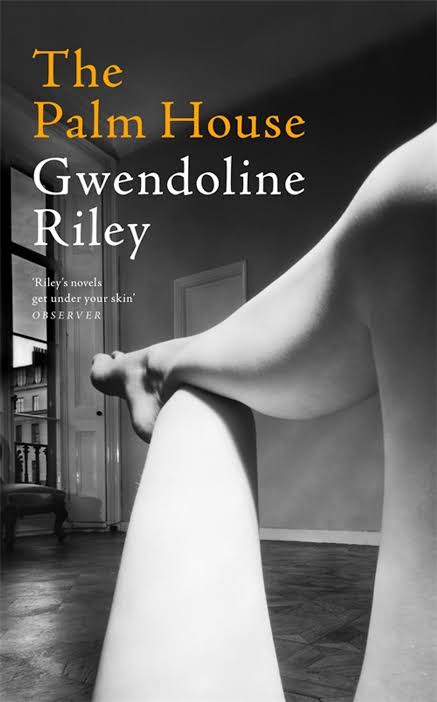
The Palm House by Gwendoline Riley appears in this year’s Booker Prize Longlist. In the rationale for Booker's selection, I isolated “the limits of human understanding; reconciliation and retribution; and the many ways we reckon with the past” as specifically visible in The Palm House.
The story is set in modern-day London, through encounters between the narrator, Laura Miller, her friends, and her mother. Recollections these conversations trigger in Laura fill in Laura's backstory. Laura and Edmund Putnam catch up regularly in their select rendezvous settings, favoured bars, his home and through phone calls. Laura and Edmund have a deeply connected friendship, and the excellent dialogue between them speaks to the times and London where both live. Putnam is middle-class, privileged and fashionably disparaging. Laura, by contrast, is sympathetic and grateful for her job, given the employment conditions in the city. The surface of all these exchanges feels breezy, yet the reader always senses what it costs Laura. Cumulatively, recollections and encounters coalesce into an unmistakable portrait of self-erasure, and Laura is revealed to us by Riley, who presses gently on every bruise.
The story concerns itself with Laura’s emotional navigation of the world and reckoning with the past. The reconstruction of her childhood pain points is the context by which we come to judge her adult self. Anyone who has read Riley’s first much-lauded work, My Phantoms, will recognise the return to the mother-daughter relationship dynamics. These masterfully written exchanges enact a failed dynamic comically and painfully. On her mother’s redundancy, Laura offers every gracious concession to levity only to encounter conversational cul-de-sacs and awkward backing out from dead ends. In her mother’s musings, she floats a possible nostalgic tour photographing every house and block of flats she ever lived in. Laura mis-times the drift and brightly suggests “you could have an exhibition” only to be scrutinised for facetious ambiguity.
You can’t read Riley as simply pulling off a trick of false equivalencies, even though it is tempting; the text slips every noose. By that trick, I mean she deploys an obvious mismatch for maximal effect. Laura interacting with her mother is a starkly polarising take on mutual misunderstanding. This is where the comedy resides before it lands like a concrete block. Schoolgirl Laura’s sexual encounters with performance celebrity Chris Patrick are overseen by Riley, who pits innocent ardour against exploitative opportunism to disconcerting effects. I won't spoil the clever devices Riley deploys, just to say this is powerful, if painful writing. I am pleased to see a Booker Longlist that honours craft in achieving effect. I would hesitate to recommend the novel because my own reaction was discomfort, but I think that says more about me than the book.