
Cameron Cowe
The Uncool
The Uncool
Couldn't load pickup availability
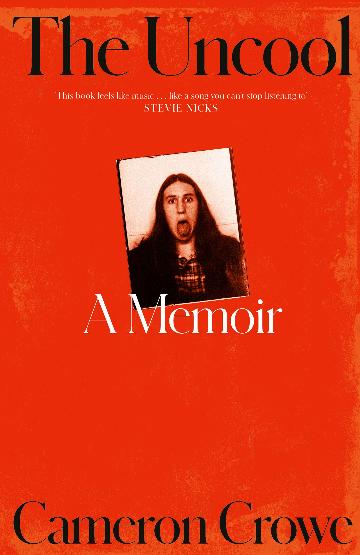
The long-awaited memoir by Cameron Crowe—one of America’s most iconic journalists and filmmakers—revealing his formative years in rock and roll and bringing to life stories that shaped a generation, in the bestselling tradition of Patti Smith’s Just Kids. If you’ve seen Almost Famous, you may think you know this story, but you don’t.
SAM'S REVIEW
If there’s a movie about music, I’ll watch it. Biopics, fictional tales, it doesn’t matter. High Fidelity, based on the book by Nick Hornby, is my favourite and, I’d argue, the best movie adaptation of any book. Singles and Almost Famous run it close in my affections, though. While Singles isn’t strictly about music, the soundtrack and the Seattle grunge scene is integral to the story. Almost Famous is absolutely about the music and captures the high, lows and monotony of a touring band (a former life of mine) so perfectly that the writer had to have lived the life. He did. The writer was Cameron Crowe, and the movie is based on his experience as a Rolling Stone journalist following the Allman Brothers Band on tour. When he was aged 16, no less.
The Uncool is Crowe’s memoir, mostly about his misspent youth touring with and interviewing the biggest rock acts in the world. It includes the detailed, occasionally scary story of his time with the Allman Brothers Band, alongside tales that keep outdoing each other with their surprises. No matter how big the artist gets, a bigger one arrives in the following chapter. I’m not going to name names, as guessing who comes next is one of the great pleasures of this book; it would make a hell of a drinking game for any touring band.
Crowe begins at the beginning, with his childhood in Palm Springs and his family’s move to San Diego as a teenager. These early chapters introduce his family. His father James A. Crowe was a military man turned real estate agent, then the owner of a telephone answering service business. His mother Alice Crowe was a teacher, psychologist and activist. He also had two sisters, Cathy and Cindy. Given that his mother Alice suffered from periods of serious depression throughout her life and his older sister Cathy committed suicide at the age of 19, Crowe could have spent a long time considering the effects this must have had on him. But The Uncool discusses only the positive influence of his family and foregoes analysis of the problems. There’s no searching of the soul; like the aforementioned films, the book is all about the music.
From the story of his first concert – the San Diego date of Elvis’s comeback tour - you can see his wide-eyed passion and his way with words: “[t]hese were the unsettling screams of mothers. The kind of scream you associate with, say, a murderer entering your house at midnight.” His first foray into journalism came at the ripe old age of 14. Introduced by his mother to labour-rights activist Cesar Chavez, Crowe “promptly blurted out something that would become a constant and a passion for the rest of my life. I wasn't even sure where, or why, or how, I'd use what I was about to ask him for. I just did. “I'd like to interview you.””
His sister Cindy introduced him to the San Diego counter-culture paper The Door, and Crowe convinced their sceptical editor to let him write about music, in part because the owner needed the advertising revenue record labels offered. As to why the world’s biggest rock stars agreed to be followed around for up to 18 months at a time by a teenager, I’ll leave it the words of one exceedingly famous and interview-shy musician: Crowe was “[y]oung enough to be honest”. (As a side note, can you imagine any journalist getting 18 months to write an article today?)
His passion put him at odds with some journalists, including his hero, legendary music writer Lester Bangs. Bangs’ opinion was “Don't make friends with the rock stars. They’ll ruin you”, but Crowe couldn’t help being a fan. Breaking all the rules, he gave one female artist he’d waited years to interview the opportunity to review his article before he sent it to his editor. And when faced with the dilemma of whether to include a male singer’s martial indiscretion in a piece he was writing, he asked himself: “What did I owe an audience of music fans like me? Did they need to meet the waitress too, or was the gift of a soul-searching personal interview enough? The best interviews allow you to appreciate the artist and the work in interesting new ways.” Somehow, Crowe appears to find the line between star-struck yes-man, gossip columnist and a preternaturally young journalist. If Rolling Stone and members of the Rolling Stones both like your work, you’re doing something right.
The Uncool barely touches on Crowe’s career writing and directing films. Nor is the book a scandalous tell-all or a deep insight into Crowe’s psyche. Instead, it’s a testament to his love of his parents, his sisters and music. It’s a lesson for any budding journalist in the power of listening, the search for the emotional hook and the art of putting the story first. And for any music fan, particularly fans of the rock bands of the 1970s, it’s a joy. A pure, laugh-out-loud joy as Crowe’s unbelievable stories keep on coming.
PUBLISHER REVIEW
'Cameron has written a book that feels like music, an intimate souvenir, like a song you can’t stop listening to' STEVIE NICKS
‘If you’re a lover of music, or you’ve ever been in love, then you have something to say. Cameron has always been someone who knows just how to say it’ HARRY STYLES
'Lyrical and compulsively readable' GUARDIAN
Cameron Crowe was an unlikely rock and roll insider. Born in 1957 to parents who strictly banned the genre from their house, he dove headfirst into the world of music. By the time he graduated high school at fifteen, Crowe was already contributing to Rolling Stone magazine. With his parents uneasily convinced, he went on to interview and tour with icons like Led Zeppelin; Lynyrd Skynyrd; Bob Dylan; Crosby, Stills, Nash, & Young; and Fleetwood Mac.
Crowe spends his teens politely turning down the drugs and turning on his tape recorder. He talks his journalism teacher into giving him class credit for his road trip covering Led Zeppelin’s 1975 tour, which lands him – and the band – on the cover of Rolling Stone. He hunkers down with David Bowie as the sequestered genius transforms himself into a new persona: The Thin White Duke. Why did they give him such unprecedented access? 'Because you’re young enough to be honest,' Bowie tells him.
At its heart, The Uncool is a surprisingly intimate family drama that charts the path that leads Crowe to writing and directing some of the most beloved films of the past forty years. It's a touching and joyful dispatch from a lost world, a chronicle of the real-life events that became Almost Famous and a coming-of-age journey filled with music legends as you’ve never seen them before.
'A winning blend of family portrait, rock history, and coming-of-age movies' KIRKUS REVIEWS
'His clarity of observation and memory, his choice words, his people – Cameron Crowe, wonderfully, continues to serve us' WES ANDERSON